At a glance
Areas we cover: the South End, Christian Shore, Atlantic Heights, the West End, Pease.
Storm history: The back-to-back nor’easters of March 2018 drove coastal flooding and damaging wind into the Seacoast, and Portsmouth’s waterfront and older neighborhoods saw roof, siding and water claims in the aftermath.
- Nor’easters
- Coastal wind
- Wind-driven rain
- Ice dams
- Burst pipes
Old houses, salt air and the Piscataqua
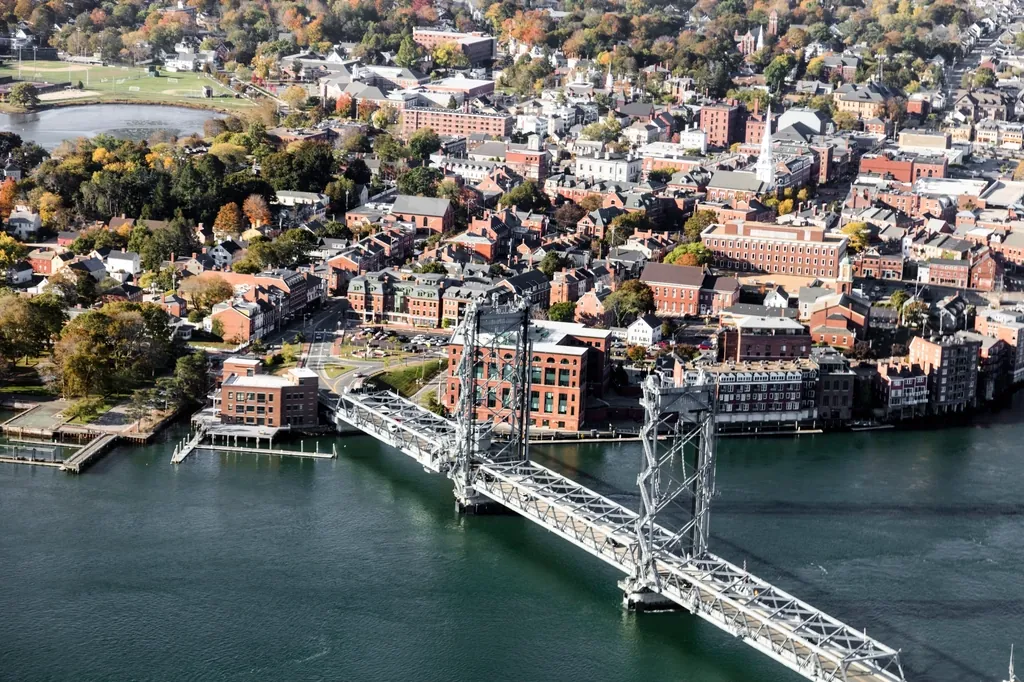
Portsmouth sits at the mouth of the Piscataqua River, a short run from open ocean. The South End, around Strawbery Banke and the waterfront, is thick with Colonial and Federal-era houses: hand-hewn frames, wide-board floors, multi-light wood windows, plaster on split lath. Christian Shore and the West End add 19th-century working-class homes and later infill. Atlantic Heights was built as worker housing in the World War I era, and out at Pease the old base has turned into offices, hangars and newer residential.
All of it is exposed to the same Seacoast weather: salt spray, wind that comes in sideways off the water and storms that hang around for a couple of tide cycles.
Historic fabric costs more to put back
When a nor’easter strips clapboards or drives rain through old window sashes, repair is not just a material swap. Matching profiles, milling custom trim, reglazing original sash and repairing plaster rather than replacing it with drywall all cost more than an off-the-shelf line item. Properties in the city’s historic district may also face review of exterior changes, which can affect both method and price.
| Item | How it is often scoped | What may be needed |
|---|---|---|
| Clapboard siding | Generic replacement by the square | Matched profile and exposure, hand-fitted |
| Wood windows | Vinyl replacement unit | Repair or replication of original sash |
| Interior walls | Drywall and paint | Plaster repair on lath |
| Trim and cornice | Stock moldings | Custom-milled to match |
Whether your policy pays for like kind and quality in these situations depends on its wording. Where it does, the difference is an amount-of-loss question.
“Wear and tear” versus storm damage
On the Seacoast, carriers often argue that siding and roof damage came from age and salt exposure, not the storm in question. Sometimes that’s fair. Often it’s only partly true. Fresh breaks, directional damage on the windward side and debris patterns tell a story, and documenting them early helps. We go through how we sort the two in wind damage appraisal and tropical storm appraisal.
Winter brings its own Seacoast twist. Old houses here were built with little or no insulation, and modern retrofits sometimes trap moisture in the wrong places. Ice dams form along deep eaves, and water finds its way behind plaster and into timber frames that have stood dry for two centuries. Drying and repairing those frames properly takes time and skill, and the estimate should say so.
Waterfront condos and mixed-use buildings
Downtown Portsmouth has a lot of condominiums carved from older commercial and residential buildings, plus new construction near the water. Wind-driven rain through a shared façade or roof deck usually means an association claim and individual unit claims at the same time. Getting the boundaries right between the two is half the work.
New Hampshire Insurance Appraiser covers Portsmouth and the surrounding Seacoast towns. Read homeowners claim appraisal for the basics, or contact us to talk through your estimate.
Appraisal help available in Portsmouth
Every New Hampshire Insurance Appraiser service is available in Portsmouth and the surrounding towns, including:
- Policyholder’s Appraiser on the Panel
- Single-Family Home Claims
- Condo, Association & Business Claims
- Roof Damage & Hail Disputes
- Microburst & Windstorm Losses
- Tropical Remnants & Coastal Storms
Asked by Portsmouth owners
Is flooding from a coastal storm covered under my homeowners policy?
Usually not. Most homeowners policies exclude flood, which is typically covered by a separate flood policy. Wind and wind-driven rain damage may still be covered under the homeowners policy. Check both policies.
Will my insurer pay to restore original wood windows?
That depends on the policy’s replacement-cost language and the facts of the damage. When coverage is accepted, the cost of an appropriate repair is something appraisal can settle.