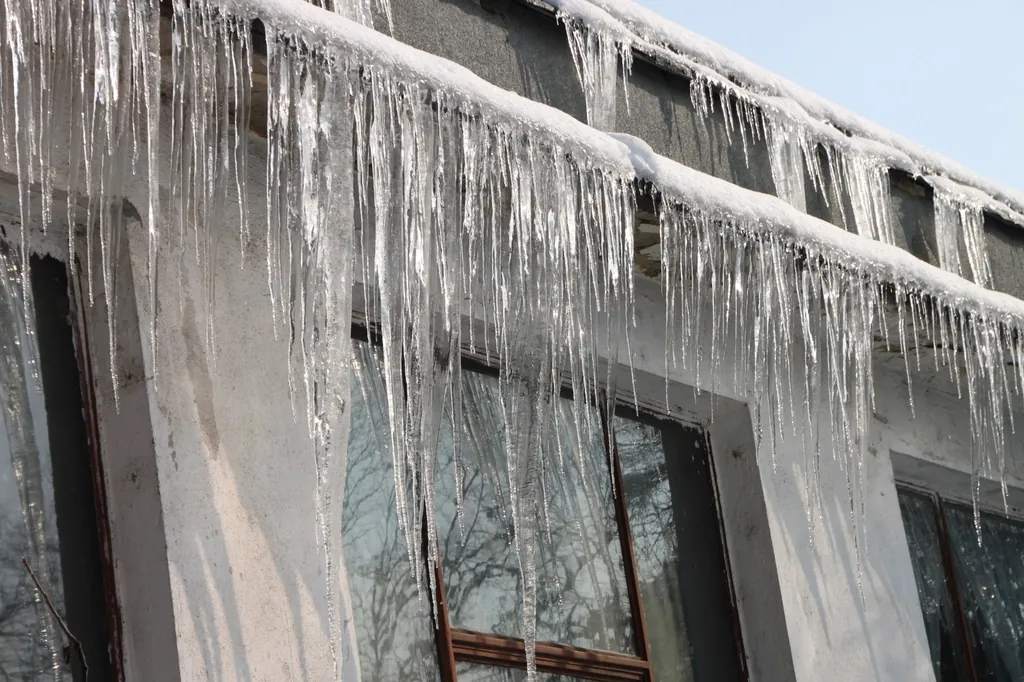
Why New Hampshire roofs grow icicles
An ice dam forms when heat escaping from the living space melts snow on the upper roof. The meltwater runs down to the cold eaves, refreezes and builds a ridge of ice. More meltwater backs up behind it, works under shingles and drips into the attic, walls and ceilings.
The conditions here are close to ideal for it: deep, lasting snowpack, long stretches of cold, sunny afternoons and a lot of older homes with modest attic insulation and complicated rooflines. Capes with knee walls are especially prone, as are additions where a newer roof meets an older one. From Manchester to Gorham, a hard winter brings a wave of ice dam claims.
What policies usually say
Many homeowners policies cover sudden and accidental water damage caused by ice dams, including interior damage. Coverage for removing the ice itself, or for repairing the roof components that let water in, varies by form. Some policies treat ice dam leaks under a specific provision; others fall under the general water damage terms. Most exclude long-term seepage and wear, which can lead to arguments about how long the problem existed.
Damage that hides until the thaw
Ice dam water rarely pours in. It seeps. That makes the damage easy to underestimate.
- Attic insulation gets saturated, compresses and loses its value — and is often left off the estimate.
- Wall cavities below the eaves can hold water for weeks; the paint looks fine while the bottom plate rots.
- Exterior sheathing and fascia may soften under intact-looking shingles.
- Window and door heads on the gable walls take water that tracks along framing.
- Mold can develop in the spring if moisture is trapped, and mold sublimits may apply.
Roof snow load and collapse
Some winters bring more than ice dams. In late February 2015, a record snowpack across the region led to roof failures on barns, commercial buildings and some homes. Wet snow and rain on top of an existing pack can add weight quickly. Low-slope roofs on commercial buildings, porches, carports and older barns are most at risk.
Collapse coverage
Many policies include “collapse” coverage for losses caused by the weight of ice, snow or sleet, but they often define collapse narrowly and exclude certain structures such as awnings, fences and some outbuildings. Sagging or cracking without an actual collapse may be treated differently.
Estimating the weight
Snow weight varies widely: light powder is a fraction of the weight of dense, wet spring snow. Our snow weight roof calculator gives a rough sense of the load on your roof. It is an educational estimate, not an engineering assessment.
Gaps we often find in ice dam estimates
- Only the stained ceiling is priced; insulation, wet framing and adjacent rooms are missing.
- Roofing repairs omit ice and water barrier at the eaves when the code requires it during replacement.
- Steam removal of the ice dam is questioned or left out, even when it was needed to stop further damage.
- Painting is limited to the damaged patch, leaving the room mismatched.
- Gutter damage from the weight of ice is overlooked.
If an ice dam claim stalls over these items, New Hampshire Insurance Appraiser can review the estimate or act as your appraiser. For leaks caused by frozen pipes rather than the roof, see our burst pipe and water damage appraisal page, and for roof-specific issues, our roof and hail appraisal page.
What owners ask about this
Will my insurer pay to remove the ice dam?
Some policies pay reasonable costs to remove ice as part of preventing further damage; others don’t. Keep invoices for steam removal and ask the carrier in writing before or promptly after the work.
Is insulation replacement part of an ice dam claim?
Wet insulation that has lost its effectiveness is often part of the covered damage. It is also one of the items most frequently left out of first estimates.
Is a sagging roof covered as collapse?
It depends on how your policy defines collapse. Some forms require an actual falling down of the structure; others are broader. Check the wording and get legal advice if coverage is disputed.