The honest odds
New Hampshire sits far enough north, with a short enough coastline — roughly 18 miles from Seabrook to the mouth of the Piscataqua River — that a hurricane making landfall here at full strength is genuinely unusual. Most tropical systems that reach the state have weakened into tropical storms or post-tropical lows by the time they arrive.
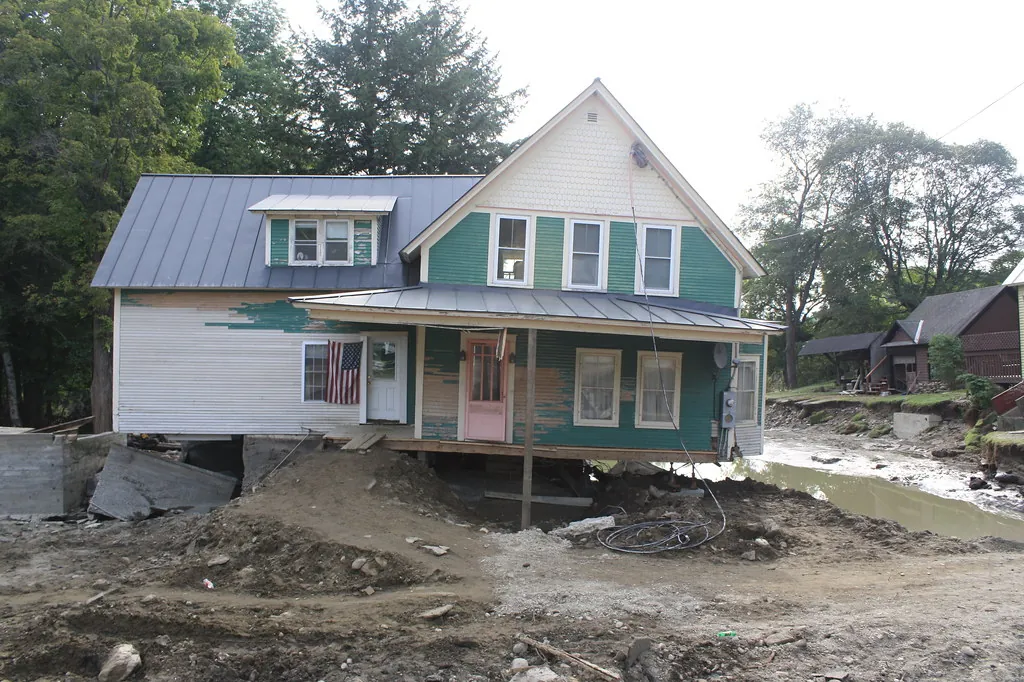
That doesn’t make them harmless. The 1938 New England Hurricane is still the benchmark: it brought destructive winds and flooding far inland, flattened huge areas of forest and damaged buildings across the state. Much more recently, Tropical Storm Irene in August 2011 caused serious flooding in the White Mountains, washing out sections of Route 302 and hitting towns such as Bartlett and Lincoln hard. Irene’s biggest damage here was water, not wind — and that distinction matters enormously for insurance.
Wind versus water
Standard homeowners and most commercial property policies generally exclude flood — surface water, overflowing rivers and storm surge. Flood coverage usually comes from a separate flood policy, often through the National Flood Insurance Program. Wind damage, and rain that enters through a wind-created opening, is typically covered under the property policy.
After a tropical storm, it is common for both to happen to the same building. A cottage in Rye might lose shingles to wind and take on water from a storm-driven tide. A camp along the Pemigewasset might have a tree through the porch roof and a flooded basement. Separating the two is careful, documented work.
- We record water lines, debris lines and the direction of water entry.
- We trace interior water stains back to roof or wall openings where wind is the cause.
- We keep wind and flood items in separate sections so each policy can respond to its share.
Hurricane deductibles on a northern policy
Some policies written for Seacoast properties in Hampton, Rye, New Castle and Portsmouth carry a hurricane or named-storm deductible, often a percentage of the dwelling limit. Inland policies may have one too. Whether it applies can depend on whether the storm was a named tropical system at the time, how the endorsement defines the triggering event, and the dates of the storm. A remnant low that has lost its tropical status may not trigger it at all. Read the wording carefully, and see our percent deductible converter.
Nor’easters: the storms that actually show up
If you own property on the Seacoast, nor’easters are the more regular threat. They bring long hours of onshore wind, heavy rain or wet snow, and coastal flooding. The October 2011 “Snowtober” storm dropped heavy, wet snow on trees still in leaf, bringing down limbs and power lines across southern New Hampshire. The March 2018 nor’easters arrived one after another, battering the coast with wind and high water.
From an estimating point of view, nor’easter damage looks a lot like tropical-storm damage: lifted shingles, saturated sheathing, broken windows, fallen trees. The same wind-versus-water questions apply.
What appraisal can sort out
When the insurer accepts wind damage but undervalues it, appraisal is a strong fit. Typical disputes involve how much of the roof needs replacing, whether siding can be matched on an older Seacoast home, and the cost of working on historic buildings in Portsmouth’s South End or Exeter. New Hampshire Insurance Appraiser can take on that valuation as your appointed appraiser. For the full process, read how New Hampshire appraisal works.
What owners ask about this
Does homeowners insurance cover tropical storm flooding?
Generally no. Most homeowners policies exclude flood, which is usually covered by a separate flood policy. Wind damage from the same storm is typically a separate, covered part of the claim.
Is there a state wind pool in New Hampshire?
No. New Hampshire doesn’t have a wind pool. Owners who can’t find standard coverage may look to the New Hampshire FAIR Plan, the state’s residual-market property insurer.
Can one storm trigger two deductibles?
It can happen when flood and wind claims are made under separate policies, each with its own deductible. Under a single property policy, the endorsement wording decides which deductible applies.