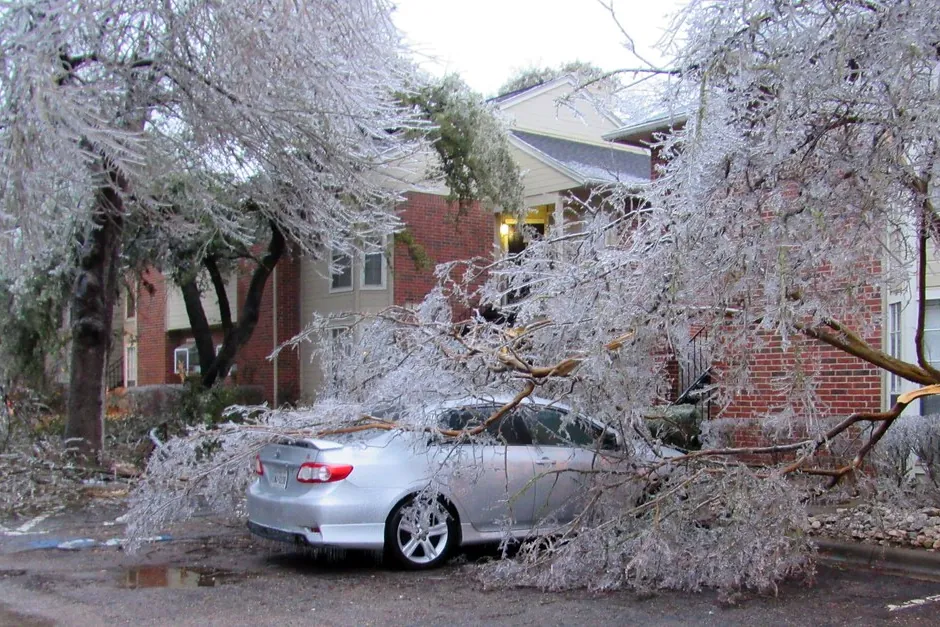
A state that is mostly woods
Something like four-fifths of New Hampshire is forested. Even in suburban Bedford or Hollis, many lots back onto stands of white pine, red oak and maple. White pines grow tall, with shallow roots and heavy limbs, and they are notorious for snapping under ice or wet snow. Older trees along roads and stone walls often lean toward houses that were built long after they took root.
When the wind or ice finally takes one down, the result can range from a few broken shingles to a home split in half.
Ice storms and the long crack of a pine
The January 1998 ice storm hit the North Country and Lakes Region hard, coating trees and lines with heavy ice. In December 2008, another ice storm caused what was then the largest power outage in state history, with hundreds of thousands of customers in the dark and trees down across southern and central New Hampshire. The October 2011 “Snowtober” storm brought down limbs still heavy with leaves. In each case, many claims involved trees on houses, garages and vehicles.
What policies typically pay for
Coverage for a fallen tree usually depends on what it hit and what made it fall.
- Damage to the house or other covered structures is usually covered when a covered peril — wind, ice, snow — caused the fall.
- Removing the tree from the structure is commonly covered, often as part of the dwelling loss or under debris removal.
- Removing a tree that fell in the yard without hitting anything is often limited or not covered, though some policies pay a modest amount if it blocks a driveway or ramp.
- Tree removal limits in many policies are capped per tree and per occurrence. Check yours.
Damage hidden under the trunk
The visible hole is only the start. A tree heavy enough to break through a roof sends force through the whole structure.
Framing
Rafters, ridge boards and top plates can crack well beyond the point of impact. Walls may be pushed out of plumb. We check alignment and inspect the attic and the framing around the impact zone.
Interior finishes
Impact shock can crack plaster and drywall in rooms that the tree never touched. In older homes with plaster ceilings, cracking can spread across a whole floor.
Water after the impact
If the roof stayed open through rain or snow before it was tarped, water damage adds another layer.
Crane time and the cost of getting it off
Removing a large pine from a roof often requires a crane, a climbing arborist and careful rigging to avoid more damage. Crane availability after a major storm is limited, and pricing reflects that. Estimates sometimes price tree removal as ordinary labor and skip the crane, emergency tarping or board-up. We document what the job actually required.
New Hampshire Insurance Appraiser handles tree-on-house claims across the state, from the Lakes Region to the Monadnock Region. If wind brought the tree down, see our wind damage appraisal page as well.
What owners ask about this
Will insurance pay to remove a tree that fell but didn’t hit anything?
Often not, or only up to a small limit in specific situations such as a blocked driveway. Check the debris removal and trees sections of your policy.
What should I do first after a tree hits my house?
Make sure everyone is safe, stay away from downed lines, report the claim, and take photographs before the tree is removed. Keep receipts for emergency tarping and removal.
My neighbor’s tree hit my garage. Whose insurance pays?
Usually your own policy handles the damage to your property. Whether the neighbor bears responsibility depends on the facts; an attorney can advise you on that.