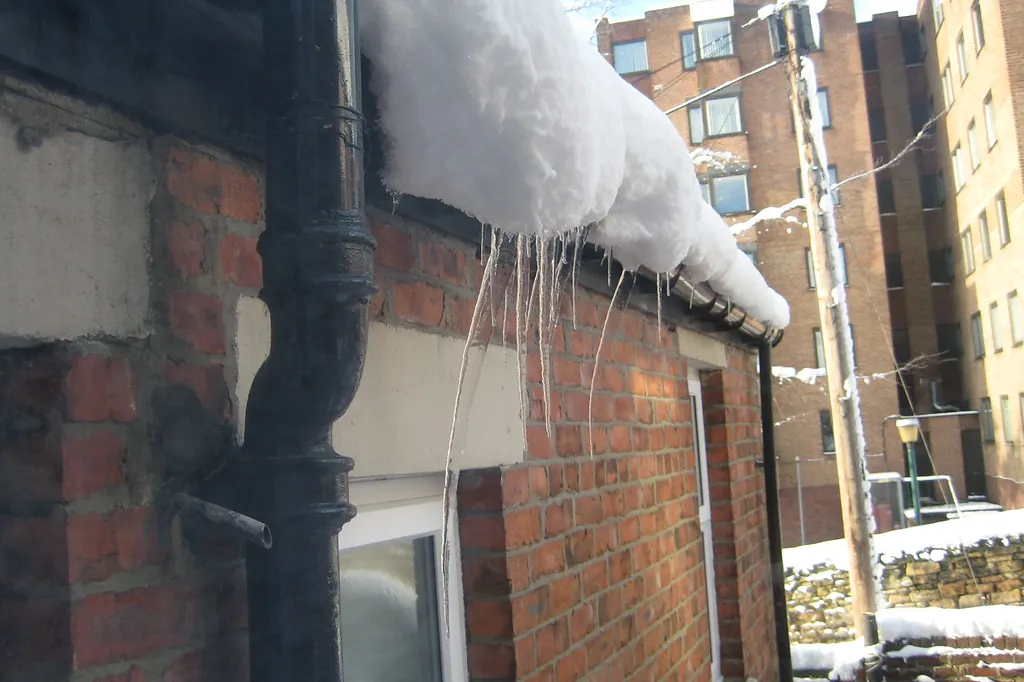
Every New Hampshire winter produces the same pair of claims. One starts with a brown stain spreading across a bedroom ceiling in February. The other starts with a cracking noise in the attic after the third storm in ten days. Both trace back to snow on the roof, but insurers look at them differently, and the paperwork you build should reflect that.
Two problems that start on the same roof
An ice dam forms when heat escaping through the roof melts the underside of the snowpack. The water runs down to the cold eave, refreezes and builds a ridge. Fresh meltwater pools behind that ridge and works its way under shingles, past the underlayment and into walls and ceilings. The damage is mostly interior: wet insulation, stained drywall, swollen trim, sometimes mold if it goes unnoticed.
Snow load damage is structural. When wet snow and ice pile up faster than they slide or melt — think of the record snowpack in late February 2015 — rafters crack, ridge beams sag and, in the worst cases, roofs come down. Older barns, flat-roofed additions and mill-era commercial buildings tend to suffer first.
Many homeowners policies treat these differently. Interior water damage from ice dams is often covered, though some forms exclude or limit the cost of repairing the roof itself. Collapse from the weight of ice and snow is typically addressed in its own provision with its own conditions. Read both sections of your policy before you call, and don’t assume one answer covers the other.
What to record before you start chipping ice
The natural reaction is to get up there and clear everything. Mitigation matters — most policies require reasonable steps to prevent further damage — but a few minutes with a phone first can save a lot of argument later.
- Photograph the roof edge from the ground, showing the ice ridge, icicles and snow depth. Include something for scale.
- Measure snow depth at several points and note whether it is light powder or dense, wet pack. Our snow weight roof calculator turns depth and type into an approximate load.
- Shoot every interior stain as it develops, with dates. Ceiling stains grow; a time-stamped series shows that.
- Look in the attic. Photograph wet insulation, frost on nail tips, stained sheathing and any cracked or deflected framing.
- Keep receipts for roof raking, steaming, tarps, fans and dehumidifiers.
Where insurer estimates usually fall short
When we review ice-dam and snow-load estimates, the same gaps come up again and again:
- Insulation left out. Wet cellulose or fiberglass loses its value and often needs removal and replacement, not just drying.
- Ceilings patched, not replaced. A stained plaster ceiling in an older Concord or Portsmouth home may not take a clean patch.
- Exterior wall cavities ignored. Water that entered at the eave often runs down inside exterior walls, wetting sheathing and insulation behind finished drywall.
- Ice and water shield missing. If a roof section is replaced, current practice and many local codes call for membrane at the eaves; check whether ordinance or law coverage applies.
- Structural engineering not included. When framing is cracked, an engineer’s assessment is often needed before anyone can price the repair.
Timing, thaw and the second inspection
A roof under two feet of snow can’t be measured or fully inspected. Adjusters sometimes write what they can see in January and close the file. If the snow hides damage, ask in writing for a reinspection after the thaw, and keep photographing as the roof uncovers. Leaks that reappear during the spring melt are useful evidence that the problem wasn’t a one-off.
Watch your policy deadlines through all of this. A winter claim that drags into summer can bump against proof-of-loss or suit-limitation dates; our deadline calendar helps you keep track, and a New Hampshire attorney can tell you how they apply.
If the numbers still don’t line up
When coverage is accepted and the only argument is about how much the repair costs, the appraisal clause may be the right next step. Our ice dam and roof snow appraisal service starts with an estimate audit, so you know the size of the gap before you commit to anything. If the insurer is denying coverage outright, that’s a question for an attorney first.